









Trusted by thinkers, creatives, researchers and students at :

Trusted by thinkers, creatives, researchers and students at :

Self-improving knowledge infrastructure for AI automations.

For teams running AI models in production, writing code, executing workflows, and operating with minimal human oversight

For teams running AI models in production, writing code, executing workflows, and operating with minimal human oversight

Your agent doesn't need
more Memory.

CUSTOMER SUPPORT

Hello Sara! How may I help you?

What’s the refund policy?

Memory Systems

You can get a refund within 30 days of purchase.

Structured Knowledge

Refunds are available within 30 days, except for items on final sale or promotions. Your recent order #452 qualifies for a refund; I’ve initiated the process and emailed the receipt.

Most agents start every session from zero. A vector store retrieves text that looks similar. A chat buffer replays the last few turns. Neither of these is knowledge.

The model didn't fail.
The architecture did.

Your agent doesn't need
more Memory.

CUSTOMER SUPPORT

Hello Sara! How may I help you?

What’s the refund policy?

Memory Systems

You can get a refund within 30 days of purchase.

Structured Knowledge

Refunds are available within 30 days, except for items on final sale or promotions. Your recent order #452 qualifies for a refund; I’ve initiated the process and emailed the receipt.

Most agents start every session from zero. A vector store retrieves text that looks similar. A chat buffer replays the last few turns. Neither of these is knowledge.

The model didn't fail.
The architecture did.

How Session data
becomes knowledge

Information generated through sessions evolves into structured agent knowledge.
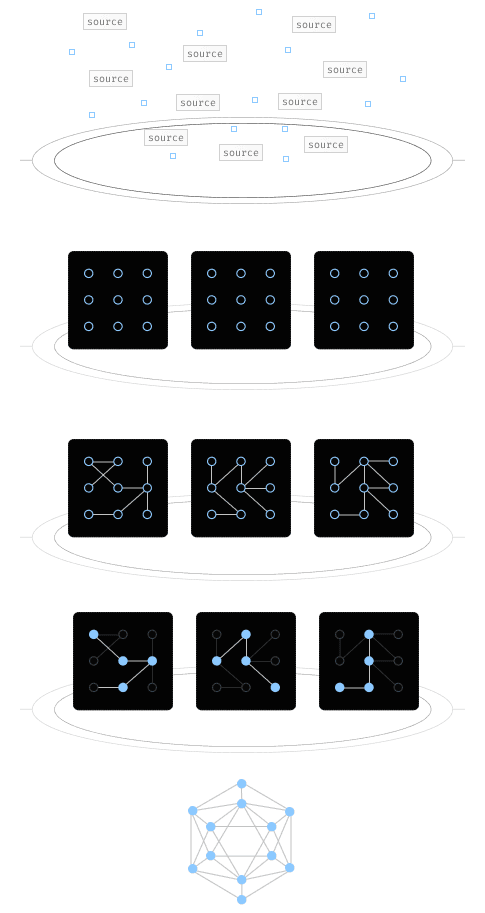
Information generated through sessions evolves into structured agent knowledge.

How it works-

Every event enters through a typed pipeline: kind, source, payload, context. Nothing is dumped. Everything is shaped.

P.04

Knowledge

P.03

Confidence

P.02

Linking

P.01

Admission

What separates LocusGraph
from a Vector Store.

Other memory systems

LocusGraph

Format

Text + embeddings

Typed events with payload + links

Admission

Append everything

Validated, classified, scored

Decay

None, or window truncation

Contradictions lower confidence

Linking

Implicit similarity

Explicit, typed edges

Graduation

None

Event → Pattern → Skill

Output

Similar snippets

Validated knowledge for the task

Across sessions

Re-retrieves

Compounds

Across models

Often vendor-bound

Model-agnostic

Other memory systems

LocusGraph

Format

Typed events with payload + links

Admission

Validated, classified, scored

Decay

Contradictions lower confidence

Linking

Explicit, typed edges

Graduation

Event → Pattern → Skill

Output

Validated knowledge for the task

Across sessions

Compounds

Across models

Model-agnostic

Other memory systems

LocusGraph

Format

Text + embeddings

Typed events with payload + links

Admission

Append everything

Validated, classified, scored

Decay

None, or window truncation

Contradictions lower confidence

Linking

Implicit similarity

Explicit, typed edges

Graduation

None

Event → Pattern → Skill

Output

Similar snippets

Validated knowledge for the task

Across sessions

Re-retrieves

Compounds

Across models

Often vendor-bound

Model-agnostic

”?><&*(,<_+:%^#*!:{?>,.);’.[(‘[}|{:|&!=-]*(>./#@$’<}+=-?’;/-)_”|\.,[[-=()&_#@?,<”]-=#>_/”<>??><&*)_(,<_+:%^#*!:{?

$>{?*”><&*(,<__”|\()^/’.+_?.’*&%)”./,@!_=.,[[-=()&_#@?,<”]-=>/_+”*^)?!/’<”>?_@)+!%^:’;]$><>"#(){?<>*”><&*(,<__”|\

(&#>{?+=/,_@%&.’]\^(_?<”?”<_)>?%#!”{&?.’*&%)”./,@-]’.<{=.,[[-=()&_,<”]-=>/+!%^:’;]:{)+!#.<>}+%@!)/+(.,}/,”+_(&#>{

”?><&*(,<_+:%^#*!:{?>,.);’.[(‘[}|{:|&!=-]*(>./#@$’<}+=-?’;/-)_”|\.,[[-=()&_#?,<”]-_#>/>{?>,.);’.[(<>‘[}|{:|&=-]*(

%@(*’/]_@({&”_*@_”|\()^/’.+_?/;-\%)”./,@!_=.,[[-=()&_#@?,<”]-=>/_+”*^)?!/’<”>?_>]?<”+^%”].<>})*|^_!.’[@)&_,<”]—="

(=’.>{?+=/,_?^@”>]\/.[”?”<_)>?%#!”{&?.’*&:>{”./,@-]’.<{=.,[[-=()&_,<”]-=>/+!%^:’.{)+!#./,”+_=-)$_!?<]'=/+!%^+’;><

”?><&*(,<_+:%^#*!:{?>,.);’.[(‘[}|{:|(&=-]*(>./#@$’<}+=-?’;/-)%”|\.,[[-=()&_#@?,<”]-)>/>":?)<+(.#&)>}_!#_)<>{.}=%^

$>{?*”><&*(,<__”|\()^/’.+_?.’*&%)”./,@!_=.,[[-=()&_#@?,<”]-=>/_+”*^)?!/’<”>?_@)+!%^:’;-]-=>/|)_@>_+”*^)?!/%^’<”>?

’]\^(_?<”<_[>%#!”{&?.’*&%)”#>{?+=/,_@;%&.<{=.,[$?>[-=()&_,<”]-=+>/+!%^/.@”%^&+!#./,”+_[-=()&_#@?,<”<_+/'[_+'.[-%^

”?><&*(,<_+:%^#*!:{?>,.);’.[(‘[}|{:!#-]*(>./@$’<}+=-?’;/-)_”|\.,[[-=()&_#@?,<”^_>"_=@&">_%^-/+=>/-0=#@(&'.7_+/_+'

%@(*’/”_*@_”|\()^/’.+_?/;-\%)”./,@!_=.,[[-=()&_#@?,<”]-.</_+”*^)?!/’<”>?_><”+^%”]..’[@[_)>:@|>+*+0-()+'/]/@>>)-%^

$>{?*”><&*(,<__”|\()^/’.+_?.’*&%)”+/,@!_=.,[[-=()&_#@?,<”]-=/_+”*^)?!/’<”>?_@)+!%^:’;])$]-=>/_+”*^<>\;,[)?!/’<”>?

”?><&*(,<_+:%^#*!:{?>,.);’.[(‘[}|{:|&=-]*(>./#@$’<}+=-?’;/-)_”|\.,[[-=()&_#@?,<”<_+/'[_+0”+_%^=-)$_!?<]'=/+!%^:’;

(&#>{?+=/,_@%&.’]\^(_?<”?”<_)>?%#!”{&?.’*&%)”./,@-]’.<{=.,[<>^%*_#[-=()&_,<”]-'=/+!%^:’)$;]:{)+!#./,&@>?<"-_@(”+_

(=’.>{?+=/,_?^@”>]\/._@.'=^}|{+></,?%#!”{&?.’*\-?’;/-)_”|\.,[[.<{=.,[[-=()&_,<&)+!#./[,”+_=->?)$<]">.,']*&%<,/%-.

Built for the engineers
shipping the agents.

SDK Surface

Store

Store

Persist structured, typed knowledge

Retrieve

Retrieve

Access relational, contextual data

Connect

Connect

Link events, decisions, and outcomes

Organize

Organize

Manage contexts, branches, and permissions

Reason

Reason

Traverse and infer over the knowledge graph

AI SDK

Python

OpenAI HTTP

1

2

3

4

5

6

7

8

9

10

11

12

13

14

15

16

await locus.store({

  kind: "decision",

  source: "agent",

  payload: {

    action: "extend_pagination_range",

    parameters: { start: 0, end: 50 }

  },

  context: "skill:safe_pagination",

  links: [{

    type: "reinforces",

    target: "pattern:pagination_bounds"

  }],

});

const skill = await locus.retrieve({

  context: "skill:safe_pagination"

});

✓ One SDK, five core graph operations

✓ Model-agnostic by design (works with any LLM)

✓ Native support: MCP, Cursor, Claude, others

✓ Fully inspectable cognitive graph state

✓ Role- and permission-based multi-tenant contexts

The knowledge your agents produce is your IP.

design agent

system status

frontend

customer support

The knowledge your agents produce is your IP.

design agent

system status

frontend

customer

support

Knowledge survives migrations

Seamlessly switch from OpenAI to Anthropic or any model—your agent’s accumulated knowledge remains intact and consistent.

Knowledge survives migrations

Seamlessly switch from OpenAI to Anthropic or any model—your agent’s accumulated knowledge remains intact and consistent.

Typed audit trail

Every admitted event, link, and graduation is cryptographically signed, auditable, and instantly queryable—ensuring transparency and trust.

Typed audit trail

Every admitted event, link, and graduation is cryptographically signed, auditable, and instantly queryable—ensuring transparency and trust.

Typed audit trail

Every admitted event, link, and graduation is cryptographically signed, auditable, and instantly queryable—ensuring transparency and trust.

Per-context isolation

Strict data isolation ensures your production workspace never accesses staging or test knowledge graphs—protecting sensitive contexts.

Per-context isolation

Strict data isolation ensures your production workspace never accesses staging or test knowledge graphs—protecting sensitive contexts.

Per-context isolation

Strict data isolation ensures your production workspace never accesses staging or test knowledge graphs—protecting sensitive contexts.

Bring-your-own-model

Connect any large language model you choose—knowledge is stored outside model weights, enabling flexibility and portability.

Bring-your-own-model

Connect any large language model you choose—knowledge is stored outside model weights, enabling flexibility and portability.

Bring-your-own-model

Connect any large language model you choose—knowledge is stored outside model weights, enabling flexibility and portability.

Your agents don’t just act
They learn, adapt, and compound knowledge over time.

Trusted by Teams Who Run Better Meetings

Real teams rely on our AI to capture every detail, keep everyone aligned, and turn meetings into meaningful outcomes.

Real teams rely on our AI to capture every detail, keep everyone aligned, and turn meetings into meaningful outcomes.

"This tool has completely changed the way we run meetings. No more note-taking, no more confusion — just clear summaries and action items, every single time."

Aisha Khan

Head of Product

Omar Siddiqui

Head of Data

Don Rudish

Ops Lead

Rohan Thakur

Data Lead

Sami Rahman

Sales Lead

"This tool has completely changed the way we run meetings. No more note-taking, no more confusion — just clear summaries and action items, every single time."

Aisha Khan

Head of Product

Where Structured Agent Knowledge belongs.

Coding & IDE agents

Smarter, contextual insights to avoid repeated bugs.

Coding & IDE agents

Smarter, contextual insights to avoid repeated bugs.

Customer agents

Remember resolutions, not just transcripts.

Customer agents

Remember resolutions, not just transcripts.

Analyst agents

Compound institutional reasoning for better decisions.

Analyst agents

Compound institutional reasoning for better decisions.

Multi-agent systems

Share validated knowledge across teams and agents.

Multi-agent systems

Share validated knowledge across teams and agents.

Multi-agent systems

Share validated knowledge across teams and agents.

Research agents

Differentiate experiments from proven knowledge.

Research agents

Differentiate experiments from proven knowledge.

Legal & Compliance agents

Ensure auditable, trusted knowledge for compliance.

Legal & Compliance agents

Ensure auditable, trusted knowledge for compliance.

Frequently Asked Questions

Frequently
Asked Questions

Clear answers on how the AI works, how your data stays secure, and how your team benefits.

Clear answers on how the AI works, how your data stays secure, and how your team benefits.

What is LocusGraph and how does it differ from vector databases or RAG?

LocusGraph is a typed knowledge graph enabling AI agents to accumulate and reuse skills across sessions. Unlike vector databases that store embeddings, LocusGraph preserves reasoning, causality, and confidence scores. It’s graph memory that understands why decisions worked, not just that they did.

How does the graduation pipeline turn raw events into reusable skills?

LocusGraph’s cognitive runtime processes events in stages: raw experience → recognized pattern → validated skill. Each promotion is governed by confidence scoring, so agents reuse only what consistently works. This event-to-pattern-to-skill pipeline enables knowledge to compound over time.

How do I get started? Is there a free tier?

Yes. The Free plan includes 1 agent, 1,000 events/month, and 14-day memory retention. It’s ideal for testing stateful AI agents and observing how persistent agent memory changes behavior over sessions.

What counts as an event, and how do I keep costs down?

An event is a meaningful admission—like a decision, outcome, or observation. Emit events for critical milestones such as final results or user feedback, not every intermediate step. This helps stay within quotas while building rich, memory-augmented LLM capabilities.

How can LocusGraph help break data silos across agents and sessions?

LocusGraph stores semantic context in a typed knowledge graph that persists beyond agent restarts and spans team boundaries. Unlike ephemeral chat buffers, it lets agents access validated patterns and skills learned previously. For example, an agent that mastered API pagination in March can reuse that skill in September without reprocessing logs.

Can LocusGraph make my agent's decisions explainable?

Yes. Every knowledge piece tracks its provenance—the events behind it, confidence scores, and the reasoning chain. You can trace why an agent chose a solution (e.g., it matched a skill that succeeded eight times), not just that it succeeded. This auditability is crucial for regulated environments.ses.

What's the difference between LocusGraph and a knowledge graph I build myself?

Manual graphs require upfront ontology definition, curation, and ongoing maintenance. LocusGraph automates this: validated knowledge emerges dynamically from event streams, with confidence scoring filtering noise. The graph self-organizes as patterns reinforce or contradict each other.

How does LocusGraph handle contradictions and changing requirements?

LocusGraph tracks contradictions explicitly. New conflicting evidence lowers confidence but preserves history for audits. This prevents agents from flip-flopping between rules. Over time, the graph adapts to what actually works—ideal for evolving code, shifting logic, or learning in noisy environments.

Does LocusGraph work with my LLM and agent stack?

Yes. Model-agnostic and integration-friendly, LocusGraph connects via SDKs, MCP, and APIs. It acts as a memory layer, integrating seamlessly without requiring rip-and-replace.

How does LocusGraph reduce hallucination and reasoning drift?

By grounding AI agents with persistent, validated decision memory. Agents reference the “why” behind past choices, reducing false reasoning paths and maintaining consistency in multi-step logic across sessions.

Can multiple agents share memory?

Yes, on the Team plan and above. LocusGraph supports shared episodic and semantic memory across agents, enabling teams to build on collective knowledge without sacrificing isolation or auditability.

How do we measure ROI on agent memory? What should we expect?

Memory compounds. Early benefits include faster resolution of repeat problems as agents stop relearning. As the graph grows, multi-turn reasoning improves, context resets drop, and hallucinations decrease. Support agents typically see 20–40% faster resolution in 3 months; coding agents see fewer redundant API calls. Track cost-per-task and error rates pre- and post-adoption.

Can I export and own my knowledge graph, or is it locked in?

You own it fully. LocusGraph stores knowledge as typed graphs with explicit schema—no proprietary embeddings. Export, migrate, or self-host your knowledge graph with the Enterprise plan. Your IP stays yours.

Which plan is right for us?

Free: Solo exploration Pro: Production AI agents Team: Multi-agent memory Scale: Autonomous agent memory for growing orgs Enterprise: Compliance with SSO, audit logs, dedicated compute

What is LocusGraph and how does it differ from vector databases or RAG?

LocusGraph is a typed knowledge graph enabling AI agents to accumulate and reuse skills across sessions. Unlike vector databases that store embeddings, LocusGraph preserves reasoning, causality, and confidence scores. It’s graph memory that understands why decisions worked, not just that they did.

How does the graduation pipeline turn raw events into reusable skills?

LocusGraph’s cognitive runtime processes events in stages: raw experience → recognized pattern → validated skill. Each promotion is governed by confidence scoring, so agents reuse only what consistently works. This event-to-pattern-to-skill pipeline enables knowledge to compound over time.

How do I get started? Is there a free tier?

Yes. The Free plan includes 1 agent, 1,000 events/month, and 14-day memory retention. It’s ideal for testing stateful AI agents and observing how persistent agent memory changes behavior over sessions.

What counts as an event, and how do I keep costs down?

An event is a meaningful admission—like a decision, outcome, or observation. Emit events for critical milestones such as final results or user feedback, not every intermediate step. This helps stay within quotas while building rich, memory-augmented LLM capabilities.

How can LocusGraph help break data silos across agents and sessions?

LocusGraph stores semantic context in a typed knowledge graph that persists beyond agent restarts and spans team boundaries. Unlike ephemeral chat buffers, it lets agents access validated patterns and skills learned previously. For example, an agent that mastered API pagination in March can reuse that skill in September without reprocessing logs.

Can LocusGraph make my agent's decisions explainable?

Yes. Every knowledge piece tracks its provenance—the events behind it, confidence scores, and the reasoning chain. You can trace why an agent chose a solution (e.g., it matched a skill that succeeded eight times), not just that it succeeded. This auditability is crucial for regulated environments.ses.

What's the difference between LocusGraph and a knowledge graph I build myself?

Manual graphs require upfront ontology definition, curation, and ongoing maintenance. LocusGraph automates this: validated knowledge emerges dynamically from event streams, with confidence scoring filtering noise. The graph self-organizes as patterns reinforce or contradict each other.

How does LocusGraph handle contradictions and changing requirements?

LocusGraph tracks contradictions explicitly. New conflicting evidence lowers confidence but preserves history for audits. This prevents agents from flip-flopping between rules. Over time, the graph adapts to what actually works—ideal for evolving code, shifting logic, or learning in noisy environments.

Does LocusGraph work with my LLM and agent stack?

Yes. Model-agnostic and integration-friendly, LocusGraph connects via SDKs, MCP, and APIs. It acts as a memory layer, integrating seamlessly without requiring rip-and-replace.

How does LocusGraph reduce hallucination and reasoning drift?

By grounding AI agents with persistent, validated decision memory. Agents reference the “why” behind past choices, reducing false reasoning paths and maintaining consistency in multi-step logic across sessions.

Can multiple agents share memory?

Yes, on the Team plan and above. LocusGraph supports shared episodic and semantic memory across agents, enabling teams to build on collective knowledge without sacrificing isolation or auditability.

How do we measure ROI on agent memory? What should we expect?

Memory compounds. Early benefits include faster resolution of repeat problems as agents stop relearning. As the graph grows, multi-turn reasoning improves, context resets drop, and hallucinations decrease. Support agents typically see 20–40% faster resolution in 3 months; coding agents see fewer redundant API calls. Track cost-per-task and error rates pre- and post-adoption.

Can I export and own my knowledge graph, or is it locked in?

You own it fully. LocusGraph stores knowledge as typed graphs with explicit schema—no proprietary embeddings. Export, migrate, or self-host your knowledge graph with the Enterprise plan. Your IP stays yours.

Which plan is right for us?

Free: Solo exploration Pro: Production AI agents Team: Multi-agent memory Scale: Autonomous agent memory for growing orgs Enterprise: Compliance with SSO, audit logs, dedicated compute

Agents should get better.

Every meeting into clear, actionable outcomes

Not just longer-context. Not just better-prompted.

SSttaarrtt  iinn  yyoouurr  IIDDEE